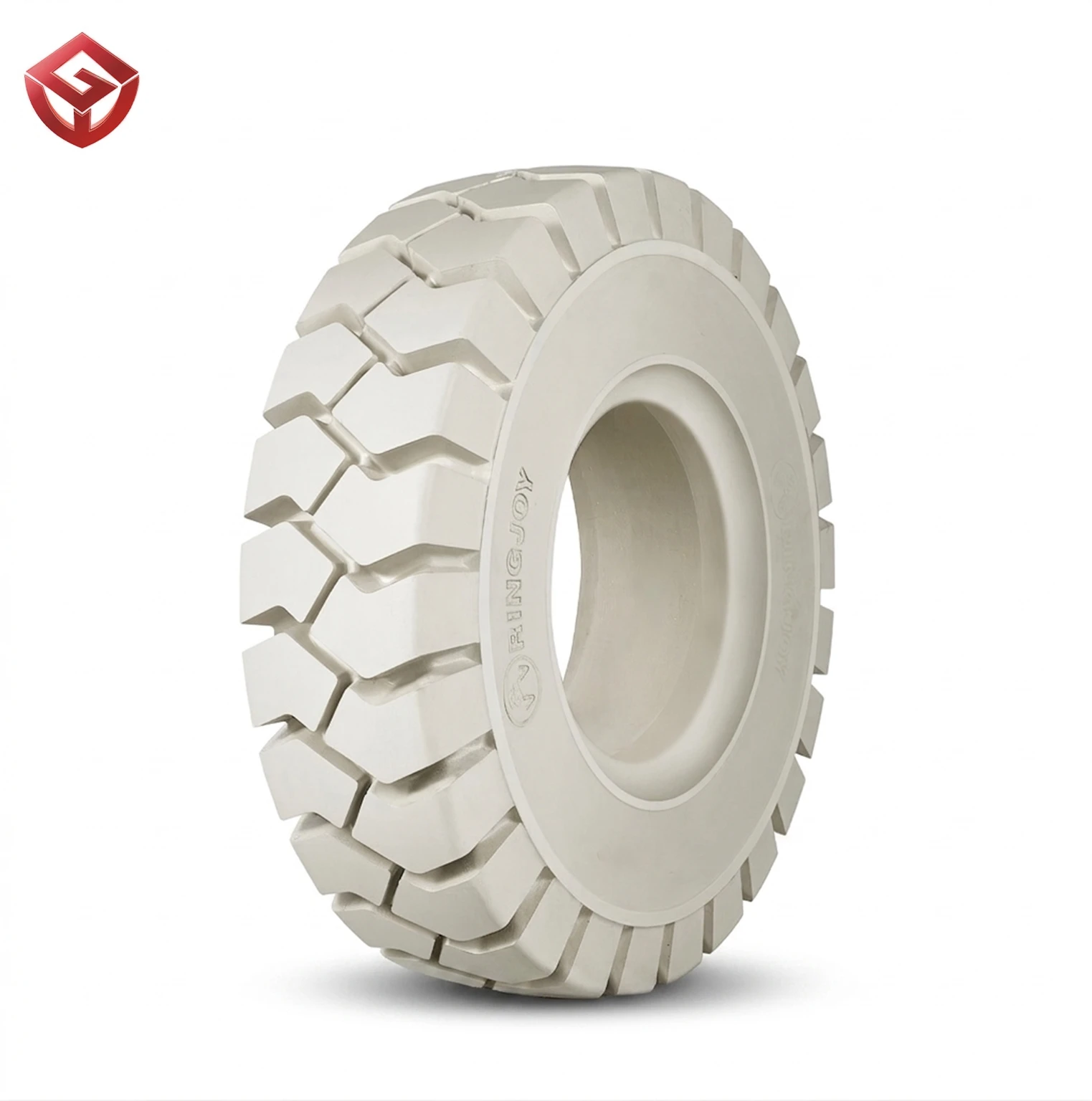
Two Mainstream Forklift Tire Structures
Forklift tires can be divided into two types: Tubed and tubeless, much like the difference between bicycle and car tires. Tubedone tires use a rubber liner for inflation, with the outer tire primarily providing protection. Tubeless tires achieve airtightness through a special sealing layer, and the tire body is thicker. Currently, about 60% of forklifts on the market use tubeless tires, which are particularly suitable for high-intensity operating environments.
Choosing the right tire depends on the intended use case.
Advantages of tubed tires: Easy repair; quick patching for single-point punctures; suitable for short-distance, intermittent work.
Advantages of tubeless tires: Good puncture resistance; slow leaks; stable tire pressure even after 8 hours of continuous work.
Cost comparison: Tubeless tires have an initial purchase cost that is about 20% higher, but their lifespan can be extended by 30%.
Key differences in maintenance:
Tubedated tires require regular checks of inner tube wear to prevent slow leaks caused by metal-to-rim friction.
Tubeless tires require special attention to bead cleaning; impurities can compromise the seal.
Both types of tires should avoid overloading. Insufficient tire pressure accelerates tread wear; weekly tire pressure checks are recommended.