

What is the fuel consumption of a cushion tire forklift on gravel?
As a supplier of cushion tire forklifts suited for gravel surfaces, I've received numerous inquiries about the fuel consumption of these machines when operating on gravel. Understanding fuel consumption is crucial for businesses, as it directly impacts operational costs and overall efficiency.
Factors Affecting Fuel Consumption on Gravel
Gravel surfaces present a unique set of challenges that can significantly influence the fuel consumption of a cushion tire forklift. First and foremost, the uneven nature of gravel requires the forklift to work harder to maintain traction and move smoothly. The tires constantly encounter small rocks and irregularities, which create additional resistance. This increased resistance means that the engine has to exert more power to move the forklift forward, backward, or turn, leading to higher fuel consumption.
The weight of the load being carried also plays a vital role. Heavier loads demand more energy from the engine to lift and transport them, especially on a gravel surface. The forklift has to overcome not only the weight of the load but also the added resistance from the gravel. For instance, if a forklift is carrying a full pallet of heavy construction materials on a gravel yard, it will consume more fuel compared to when it is moving an empty pallet.
Another factor is the driving style. Aggressive driving, such as rapid acceleration and hard braking, can cause a significant spike in fuel consumption. On gravel, sudden movements can cause the tires to slip, further increasing the workload on the engine. A more smooth and controlled driving style can help reduce fuel usage.
The condition of the forklift itself is also important. A well - maintained forklift with properly inflated tires, a clean air filter, and a tuned engine will operate more efficiently than one that is in poor condition. On gravel, worn - out tires may have reduced traction, forcing the engine to work harder.
Measuring Fuel Consumption
To accurately measure the fuel consumption of a cushion tire forklift on gravel, several methods can be used. One common approach is the direct measurement method. This involves filling the fuel tank to the brim, operating the forklift on the gravel surface for a set period or distance, and then refilling the tank to the same level. The amount of fuel added is the fuel consumed during that operation.
Another method is to use onboard fuel monitoring systems. Many modern forklifts are equipped with these systems, which can provide real - time data on fuel consumption. These systems can track how much fuel is being used per hour of operation or per unit of work done, such as per pallet moved.
Typical Fuel Consumption Ranges
It's difficult to provide an exact figure for the fuel consumption of a cushion tire forklift on gravel, as it varies widely depending on the factors mentioned above. However, on average, a small - to - medium - sized cushion tire forklift may consume between 2 to 4 liters of fuel per hour when operating on gravel under normal load conditions. Larger forklifts or those carrying heavy loads may consume 4 to 8 liters per hour or even more.
For example, a forklift with a 3 - ton lifting capacity might consume around 2.5 liters per hour when moving light loads on a relatively smooth gravel surface. But if it's moving heavy loads on a rough and uneven gravel area, the consumption could increase to 3.5 liters per hour or more.
How Our Cushion Tire Forklifts Perform on Gravel
At our company, we understand the importance of fuel efficiency, especially when operating on challenging surfaces like gravel. Our cushion tire forklifts are designed with advanced engine technology to optimize fuel consumption. We use engines that are calibrated to provide the right amount of power for the task at hand, whether it's lifting a small load or a heavy one on gravel.
Our forklifts are also equipped with high - quality cushion tires that are specifically designed for gravel surfaces. These tires offer excellent traction, reducing the amount of slippage and thus lowering the workload on the engine. For example, our 6.50 10 Solid Forklift Tire provides a stable and reliable grip on gravel, ensuring that the forklift can move smoothly with less fuel consumption.
We also offer Railway Forklift Tire options for those who need to operate on more specialized gravel - like surfaces, such as railway yards. These tires are engineered to handle the unique challenges of these environments, further enhancing fuel efficiency.
In addition, our 8.25 12 Solid Forklift Tire and 12.00 20 Solid Forklift Tire are suitable for larger forklifts that need to carry heavy loads on gravel. These tires are made from high - quality rubber compounds that offer durability and excellent performance, which in turn helps to reduce fuel consumption.
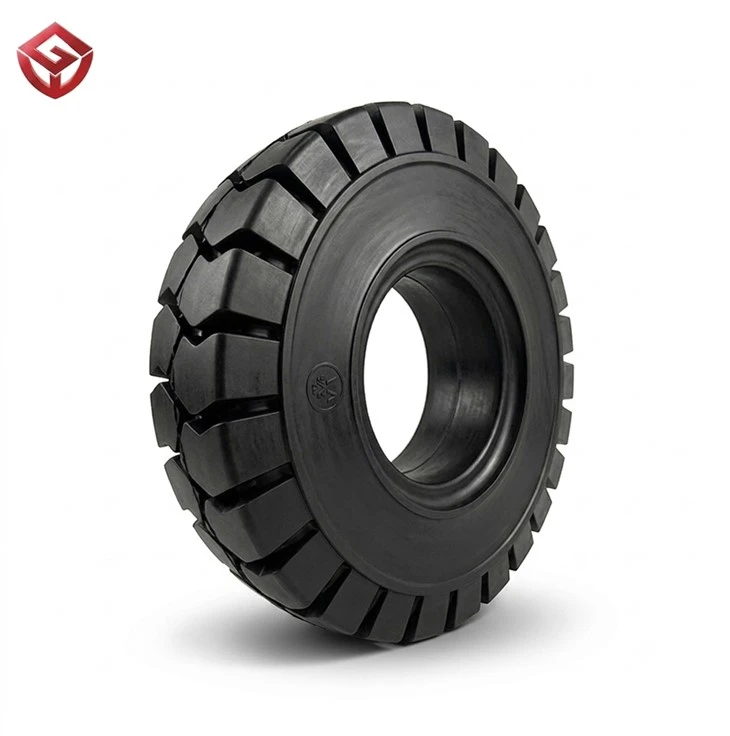
Our Forklift Solid Rubber Tire range is designed to provide a balance between traction and fuel efficiency. The solid rubber construction ensures that the tires can withstand the wear and tear of gravel surfaces while minimizing the energy loss due to tire deformation.
Tips to Reduce Fuel Consumption on Gravel
If you're using a cushion tire forklift on gravel, there are several steps you can take to reduce fuel consumption. First, ensure that the forklift is properly maintained. Regularly check the tire pressure, change the oil and air filter, and keep the engine in good condition. A well - maintained forklift will operate more efficiently.
Second, plan your routes carefully. Avoid unnecessary back - and - forth movements and choose the shortest and smoothest paths on the gravel surface. This can reduce the distance the forklift has to travel and the amount of resistance it encounters.
Third, train your operators to use a smooth and controlled driving style. Encourage them to accelerate and decelerate gradually and to avoid sudden turns. This can help reduce tire slippage and lower fuel consumption.
Conclusion
In conclusion, the fuel consumption of a cushion tire forklift on gravel is influenced by multiple factors, including the surface conditions, load weight, driving style, and the condition of the forklift itself. While it's challenging to provide an exact figure, our cushion tire forklifts are designed to offer optimal fuel efficiency on gravel surfaces. We use advanced engine technology and high - quality tires to ensure that our forklifts can operate effectively while minimizing fuel usage.
If you're in the market for a cushion tire forklift for gravel operations, we'd love to have a conversation with you. We can provide more detailed information about our products, their fuel consumption rates, and how they can meet your specific needs. Contact us today to start the procurement process and find the perfect forklift solution for your business.
References
- Forklift Operator's Manuals
- Industry research on forklift fuel consumption
- Technical specifications of cushion tire forklifts and their tires
