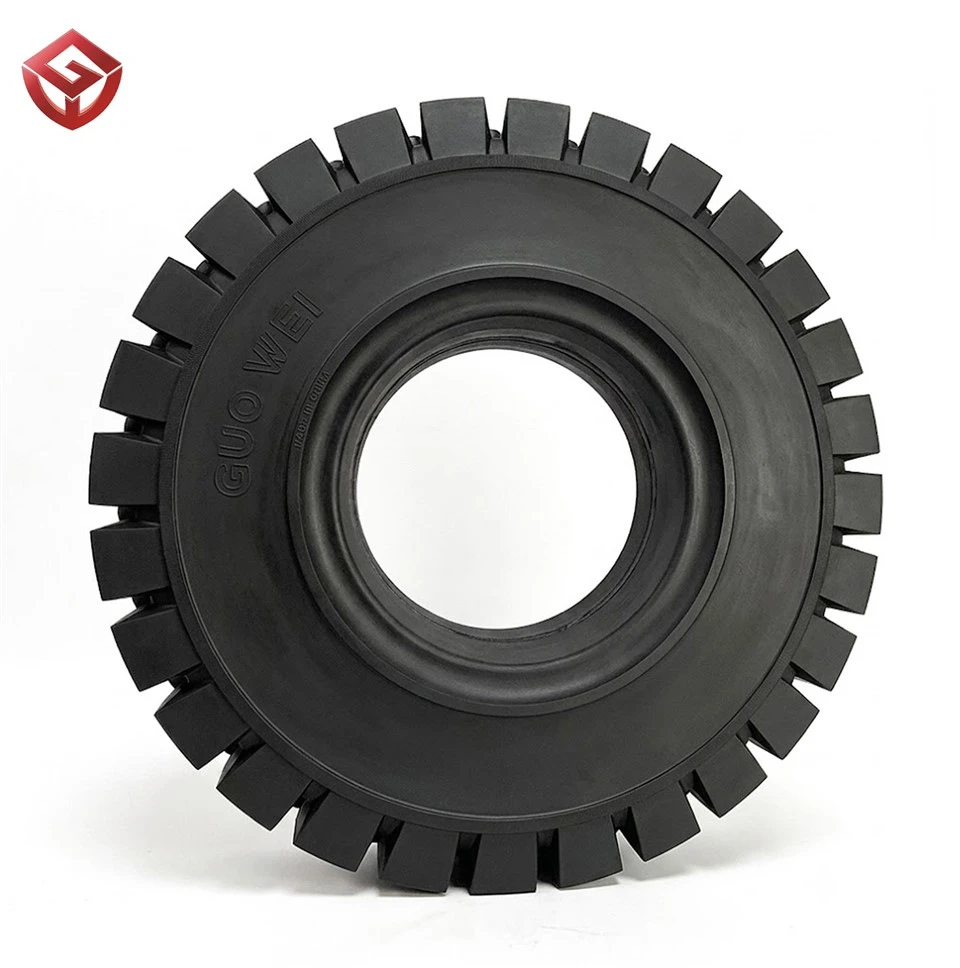
Hey there! I'm a supplier of Solid Cushion Forklift Tires, and today I wanna chat about a pretty important question: Do solid cushion forklift tires affect the forklift's steering?
First off, let's get to know solid cushion forklift tires a bit better. These tires are made of solid rubber, which makes them different from pneumatic tires. Solid cushion tires are extremely durable and puncture-resistant. They're perfect for indoor use as well as some outdoor applications where the terrain is relatively flat. You can check out our Industry Solid Tire for more options.
Now, onto the steering bit. Steering is a crucial aspect of forklift operation. It affects how easily and safely you can move the forklift around, whether you're navigating narrow aisles in a warehouse or maneuvering around a storage yard.
When it comes to how solid cushion forklift tires can impact steering, there are a few factors to consider.
Traction and Grip
One of the first things is traction. Solid cushion tires have a unique way of gripping the ground. Their solid rubber construction gives a consistent contact area with the surface. This can be both good and bad for steering.
On the plus side, the consistent traction means that the forklift is less likely to slip during turns. When you're making a sharp turn in a warehouse, the tire maintains its grip, allowing for a more predictable steering experience. You don't have to worry about the wheel suddenly losing traction and causing the forklift to skid. This is especially important in high - traffic areas where safety is a major concern.
However, the solid design also means that the tires may not adapt as well to uneven surfaces as pneumatic tires. If there's a small bump on the floor, a pneumatic tire can compress slightly to maintain contact and traction. Solid cushion tires, on the other hand, have a harder time adjusting. This can make the steering feel a bit jerky when going over such uneven patches, and you might need to put in a bit more effort to keep the forklift on course.
Tire Stiffness
Solid cushion tires are quite stiff compared to pneumatic ones. This stiffness can have a direct impact on steering. When you turn the steering wheel of a forklift with solid cushion tires, the tires resist the change in direction more. This is because they don't flex as much as pneumatic tires.
As a result, you'll notice that the steering wheel may feel heavier. You have to use more force to turn it, especially at lower speeds. At higher speeds, though, the inertia and momentum of the forklift can help overcome some of this stiffness. But it still means that operators need to be more aware of their steering input.
Another aspect related to stiffness is the turning radius. The stiffer the tires, the larger the turning radius can be. If you're working in a confined space with lots of tight turns, this can be a real challenge. You might need to be extra careful when planning your moves to avoid hitting obstacles.
Heat Buildup
Solid cushion tires tend to generate more heat during operation than pneumatic tires. This heat can affect the tire's physical properties over time. As the tire gets hotter, it can become even stiffer, which in turn makes the steering even more difficult.
Imagine you're running a long shift in a busy warehouse. The continuous use of the forklift causes the solid cushion tires to heat up. As the heat builds up, the extra stiffness makes the steering wheel feel like it's been glued in place. You have to keep adjusting your grip and applying more force to make the required turns.
This heat - induced stiffness can also reduce the tire's lifespan. Over time, the rubber can degrade, and you might end up needing to replace the tires more frequently.
Comparing Different Types of Solid Tire
We have different types of solid tires available, each with its own characteristics and how they affect steering.
For example, Rough Terrain Forklift Tires are designed for more challenging outdoor environments. They usually have deeper treads and a more rugged construction. These tires provide better traction on rough ground but can also add more resistance to steering. The deeper treads mean more contact with the ground, which in turn means more force is needed to turn the wheels.

On the other hand, New Solid Forklift Tire options are often engineered with the latest technology to balance durability and performance. Some new designs aim to reduce the negative impact on steering. They might have a more flexible rubber compound or a unique tread pattern that allows for easier steering while still maintaining good traction.
Specific Sizes and Their Impact
The size of the solid cushion forklift tire also plays a role in steering. For instance, a 18x7 8 Solid Forklift Tire is relatively larger compared to some other sizes. Larger tires generally have a larger contact area with the ground. This means more traction but also more resistance to steering. Turning a forklift with these larger tires requires more effort from the operator.
In contrast, a 5.00 8 Solid Forklift Tire is smaller. Smaller tires have a smaller contact area, which can make them easier to turn. However, they might not provide as much stability as larger tires, especially when carrying heavy loads.
Mitigating the Impact on Steering
Even though solid cushion forklift tires can have an impact on steering, there are ways to mitigate these effects.
Proper maintenance is key. Regularly checking the tire pressure (even though they're solid, they can still be affected by factors like wear and heat), and making sure the tires are in good condition can help. If you notice any signs of uneven wear, it's important to address it quickly, as this can cause the steering to become unbalanced.
Another thing is operator training. Training operators on how to handle forklifts with solid cushion tires can make a big difference. They need to be aware of the heavier steering and adjust their driving techniques accordingly. For example, they can start turning the steering wheel earlier when making a turn to account for the larger turning radius.
Conclusion
So, do solid cushion forklift tires affect the forklift's steering? The answer is yes, they do. The traction, stiffness, heat buildup, tire type, and size all play a role in how the tires impact steering. But with proper understanding and management, these effects can be minimized.
If you're in the market for solid cushion forklift tires, we've got a wide range of options to suit your needs. Whether you need tires for indoor use or rough outdoor terrain, we can provide you with high - quality products. If you're interested in learning more about our products or have any questions regarding how they'll work for your forklift, don't hesitate to reach out. We're always here to help you make the right choice for your business.
References
- Forklift Operator's Manuals
- Research papers on forklift tire performance
- Industry reports on solid cushion forklift tires